Publications
37 research articles
2026
-
Out-of-time-order hydrodynamics and scrambling
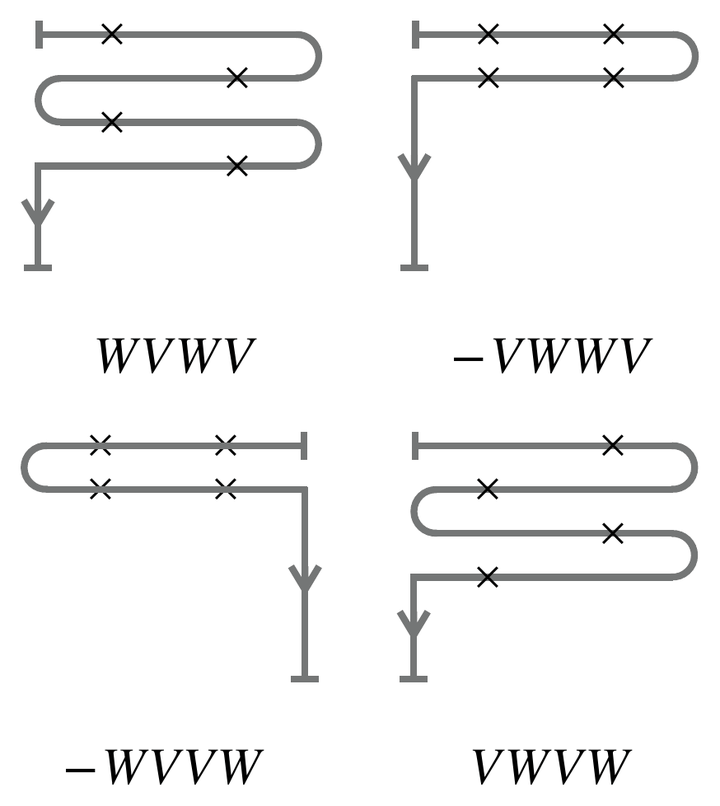
In chaotic quantum systems, from black holes to strongly interacting materials, information about a small disturbance quickly spreads through the whole system, a process called scrambling. Detecting it requires evolving the system forwards and backwards in time twice, beyond the reach of ordinary hydrodynamics, our theory of how energy flows. We extend hydrodynamics to this setting using an extra symmetry acting on time, and derive it exactly from the SYK lattice, a solvable model of interacting quantum particles. There, energy flow scrambles information as fast as quantum mechanics allows.
-
All-order fluctuating hydrodynamics of the SYK lattice
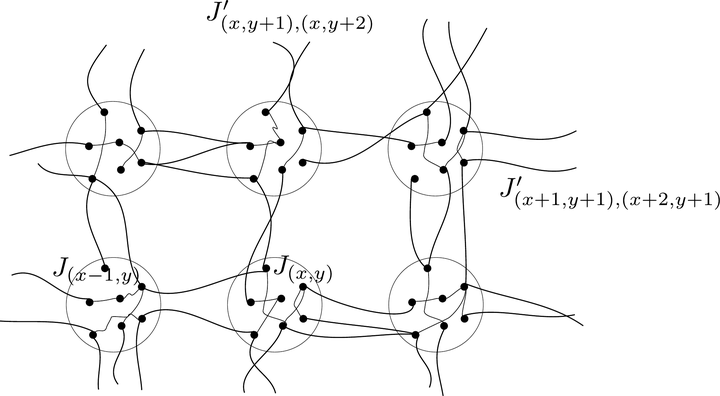
Hydrodynamics describes how energy and charge flow in almost any system at long distances and late times, but deriving it from the underlying microscopic physics is notoriously hard, especially when the particles interact strongly. We do this for the SYK lattice, a solvable model of strongly interacting quantum particles that has become a playground for quantum chaos. We show how hydrodynamics, random fluctuations included, emerges from the model at low energies, and pin down every ingredient of the theory, including the infinite series of corrections that are usually neglected.
-
Quantum fluctuations in hydrodynamics and quantum long-time tails
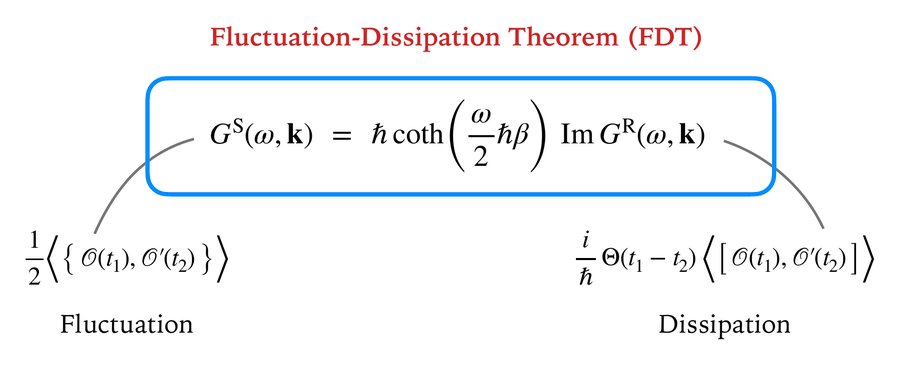
Wherever there is dissipation there are also fluctuations, as the fluctuation-dissipation theorem states. Hydrodynamics usually includes them as classical random noise, which fails when quantum effects are as fast as the system’s own microscopic processes, as in many strongly interacting systems. I construct a quantum version of the effective theory of diffusion that obeys the theorem in full. One surprise is that its noise is necessarily non-Gaussian. I also compute how quantum effects modify the long-time tails, the slow fading of disturbances in a fluid, to all orders in Planck’s constant.
-
Thermodynamics of ideal spin fluids and pseudo-gauge ambiguity
Collisions of heavy nuclei create a droplet of quark-gluon plasma that swirls so strongly it lines up the spins of the particles it produces. Describing it needs spin hydrodynamics, but how angular momentum splits between the flow and the particles’ spin is not unique: different “pseudo-gauge” choices give different answers, and those that come out of microscopic models break the usual rules of thermodynamics. We find a family of choices in which these rules hold, measure how much the spin’s thermodynamic properties depend on the choice, and work them out for free fermions and scalar fields.
2025
-
Temperature of an active nematic
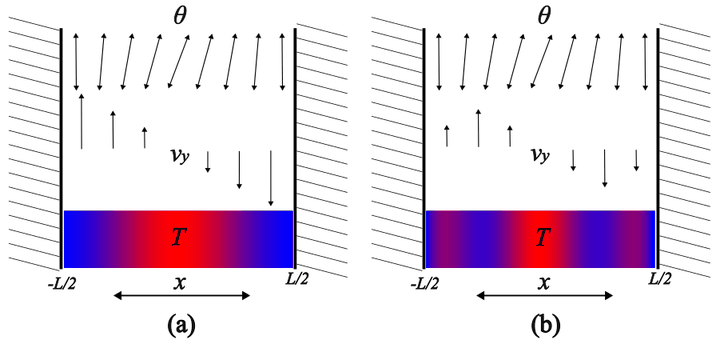
Active matter, such as bacterial suspensions or the filaments inside cells, is made of units that burn fuel to move on their own. We ask what the local temperature of such a system looks like, using a hydrodynamic framework that tracks the exchange of energy with the environment. In a uniform active nematic, a liquid crystal of such units, activity leaves the temperature fluctuations unchanged. But when the nematic is confined and starts to flow spontaneously, local shearing and twisting produce a distinctive uneven temperature profile: a thermal fingerprint of activity.
-
Resistive relativistic magnetohydrodynamics without Ampère’s law
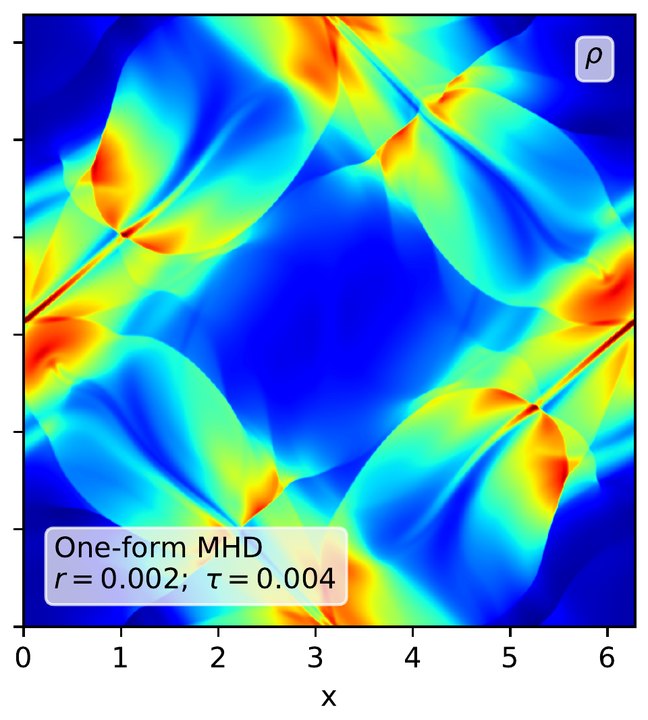
Magnetic reconnection, where magnetic field lines in a plasma break and rejoin, powers flares and particle acceleration in high-energy astrophysics. It relies on the plasma’s small electrical resistance, which is hard to simulate: in the traditional description, Ampère’s law makes the equations “stiff” and forces tiny time steps. We drop Ampère’s law altogether, using a formulation of magnetohydrodynamics based on a higher-form symmetry in which resistivity acts like a magnetic viscosity, and build a causal numerical scheme that handles strong shocks moving near the speed of light.
2024
-
Fractonic solids
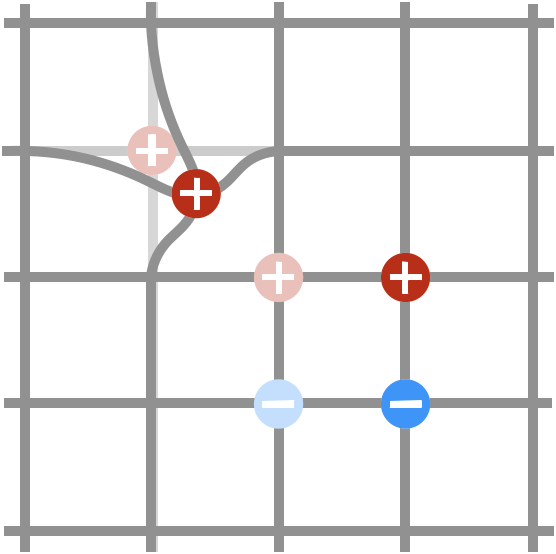
Fractons are exotic quasiparticles that cannot move on their own, only in pairs or larger groups. The symmetries behind this are at odds with those of space and time: theories with them cannot, for instance, be coupled to gravity. Yet in real materials, such as crystals with defects, fractons should be stuck to the material rather than to space itself. I propose a symmetry that restricts their motion relative to a crystal, which can itself move and deform. This removes the conflicts with space and time, and I also build a holographic model of such fractonic solids.
-
Hydrodynamics of thermal active matter
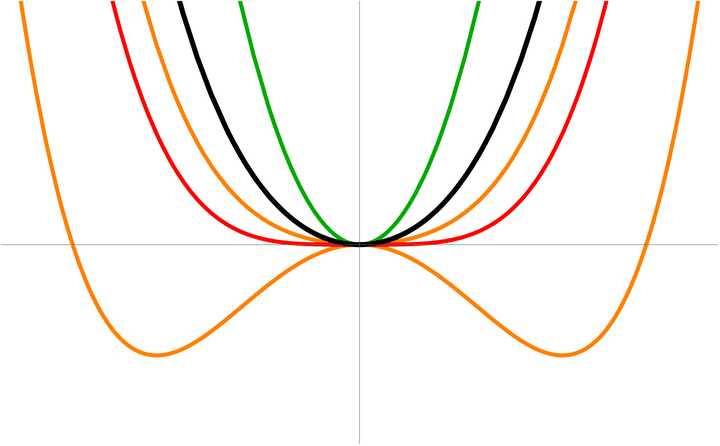
Living things stay ordered by burning fuel and shedding the excess heat into their surroundings. Active matter, from bacterial colonies to the filaments inside cells, works the same way, yet theories of its flow usually leave out temperature, since fuel keeps pumping in energy. We model active matter as an open system that burns fuel and loses heat to its environment, settling at a steady temperature. The resulting theory includes temperature and random fluctuations, traces how active matter breaks the rules of thermal equilibrium to one source, and predicts activity-driven phase transitions.
-
Higher-group global symmetry and the bosonic M5 brane
Physicists classify phases of matter, such as magnets or superfluids, by which symmetries they break. The idea now extends to “higher-form” symmetries, whose charges are extended objects such as strings and membranes, and to “higher groups” that intertwine several of them. We show that such symmetries arise in supergravity, the low-energy limit of string and M-theory, when branes are present, and classify the phases they allow. For the bosonic M5-brane, a five-dimensional object in M-theory, all the fields living on it turn out to be ripples of broken symmetries, called Goldstone modes.
-
Dipole superfluid hydrodynamics. Part II.
In some quantum systems, not only the total charge but also its centre is conserved, so isolated charges cannot move: a hallmark of fractons, which can be realised with atoms in tilted optical lattices. At finite temperature such systems can form unusual superfluids. We develop the theory of how “s-wave” dipole superfluids flow, which requires a new way of deciding which effects matter most at long distances. We find ordinary sound waves alongside a dipole version of superfluid “second sound” that travels like spin waves in a magnet, and work out how these fluids respond to external probes.
2023
-
Schwinger-Keldysh effective field theory for stable and causal relativistic hydrodynamics
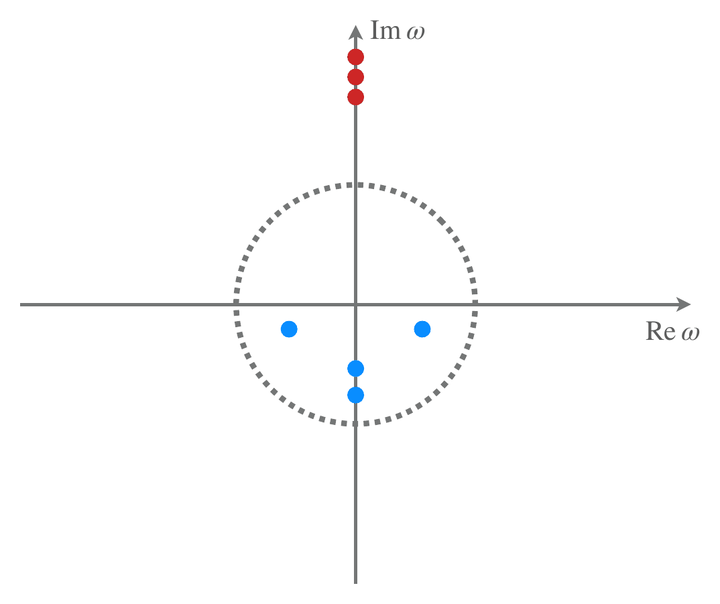
Relativistic hydrodynamics describes fluids where relativity matters, like the plasma made in collisions of heavy nuclei. Its textbook version has a notorious flaw: seen by a moving observer, it predicts signals faster than light and runaway instabilities. Known fixes repair the equations but leave out random thermal fluctuations, which matter near critical points. We build theories of diffusion and of full relativistic hydrodynamics that include them, are stable and causal by design, and respect the link between fluctuations and dissipation, and show why one popular fix doesn’t carry over.
-
Dipole superfluid hydrodynamics
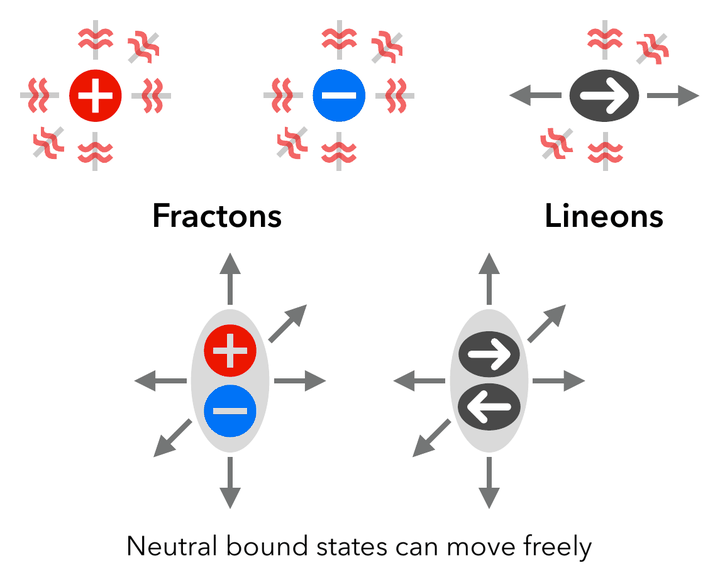
Fractons, exotic excitations that cannot move on their own, can arise in systems that conserve not just charge but also its centre, the dipole moment. This is expected in two-dimensional elastic materials, vortices in superfluid helium and atoms in tilted optical lattices. We develop the theory of how they flow at finite temperature, showing that they only transport charge if the dipole symmetry is spontaneously broken, making them “dipole superfluids”. Their ripples are unusual: sideways disturbances fade far more slowly than in ordinary fluids, and sound behaves like spin waves in a magnet.
-
Approximate higher-form symmetries, topological defects, and dynamical phase transitions
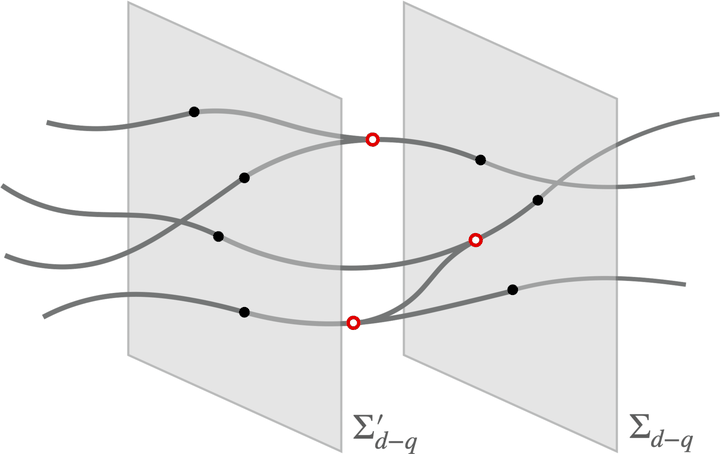
Higher-form symmetries, whose charges are extended objects such as magnetic field lines, help classify phases of matter. In real materials they are rarely exact: topological defects, such as vortices or charges on which field lines end, break them slightly. We build effective theories and hydrodynamics for such approximate higher-form symmetries and the ways they can be broken. The framework captures phase transitions driven by a proliferation of defects, from the melting of liquid crystals and the ionisation of a gas into a plasma to spin ice and the Meissner effect in superconductors.
2022
-
Hydrodynamics of plastic deformations in electronic crystals
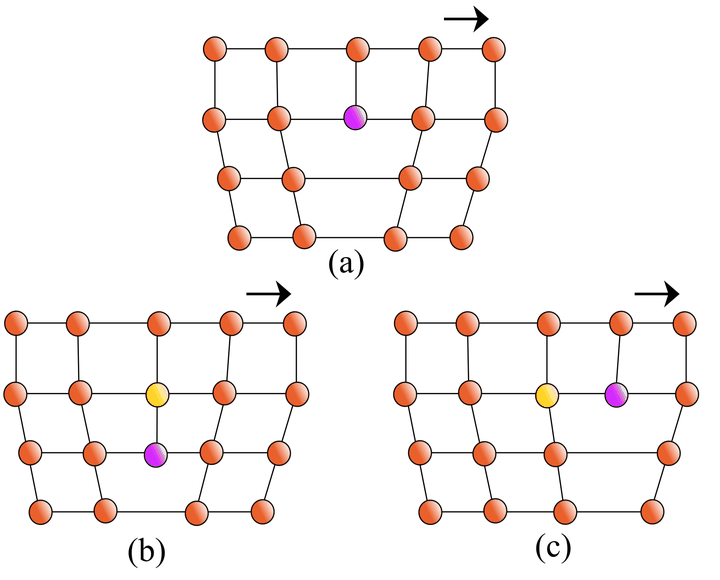
When electrons repel each other strongly enough, they can freeze into a crystal of their own, such as a Wigner crystal or a charge density wave. These electronic crystals are fragile and hard to observe: impurities pin them in place and defects disrupt their order. We build a hydrodynamic theory of such crystals that includes pinning, vacancies and plastic deformations caused by moving dislocations. As dislocations multiply, the crystal’s conduction comes unpinned until it melts, giving way to a new phase: a pinned electronic liquid. We also suggest experiments to detect these signatures.
2021
-
Approximate symmetries, pseudo-Goldstones, and the second law of thermodynamics
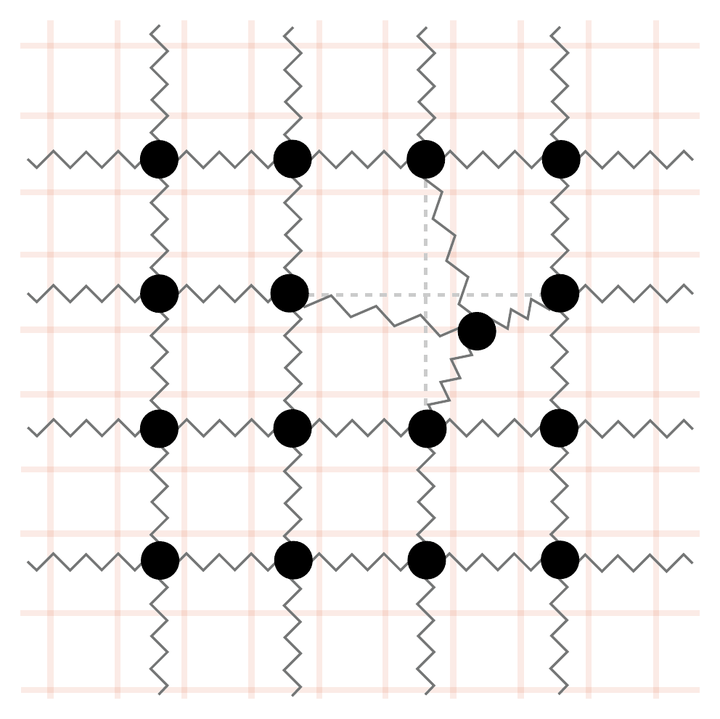
Symmetries are useful even when they are only approximate: pions, for instance, are nearly massless ripples of an approximate symmetry of the strong force. Similar “pseudo-Goldstone” ripples appear in materials where impurities pin crystals, charge density waves or superfluids in place. We build a general hydrodynamic theory of such systems and show that the second law of thermodynamics alone implies their relaxation, along with a universal relation between how quickly the ripples die out and how fast they diffuse. We also find new effects that are sensitive to how the symmetry is broken.
-
Fractons in curved space
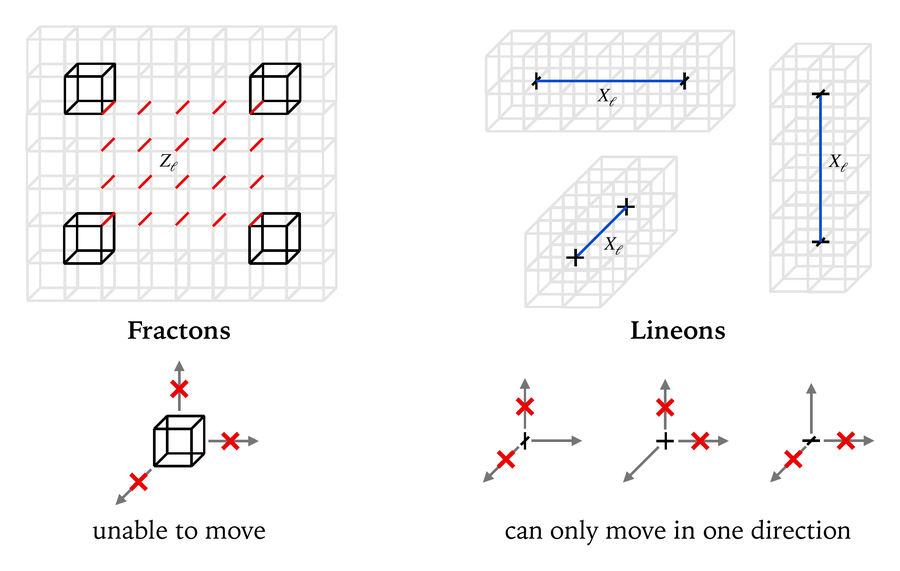
Fractons are exotic excitations that cannot move on their own, because the theories describing them conserve not only charge but also its centre, the dipole moment. These unusual symmetries make it unclear how to place such theories in curved space, a step needed to define their energy and momentum and, eventually, to describe how they flow. We show how to do this consistently for simple fracton field theories, and find hints of an anomaly: the gauge theory that naturally couples to dipoles cannot be put in curved space while keeping all its symmetries. The results extend to higher moments.
2020
-
Hydrodynamic effective field theory and the analyticity of hydrostatic correlators
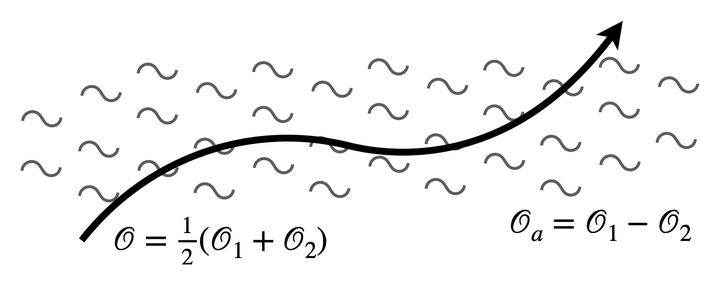
Hydrodynamics usually ignores the random thermal fluctuations present in every fluid, yet these interact and leave long-lasting imprints, such as long-time tails. In equilibrium, however, a fluid’s static response should still die off quickly with distance, a sign of thermal screening. We test this in the effective field theory of fluctuating hydrodynamics, computing the leading corrections for diffusing charge. The corrections do produce long-range effects in time, but a symmetry encoding the fluctuation-dissipation theorem cancels them in the static response, as equilibrium requires.
-
Effective field theory for hydrodynamics without boosts
Most theories of fluids assume that physics looks the same to an observer moving at constant speed, a symmetry called boost invariance. Many systems break it, such as fluids flowing through a medium, electrons in some quantum materials, or very cold liquid helium-3. We build the effective field theory of hydrodynamics without boost symmetry, including random fluctuations, and find 29 independent transport coefficients at first order. Sound then travels at different speeds with and against the flow. The framework treats relativistic, non-relativistic and exotic fluids alike.
-
Late Time Correlations in Hydrodynamics: Beyond Constitutive Relations
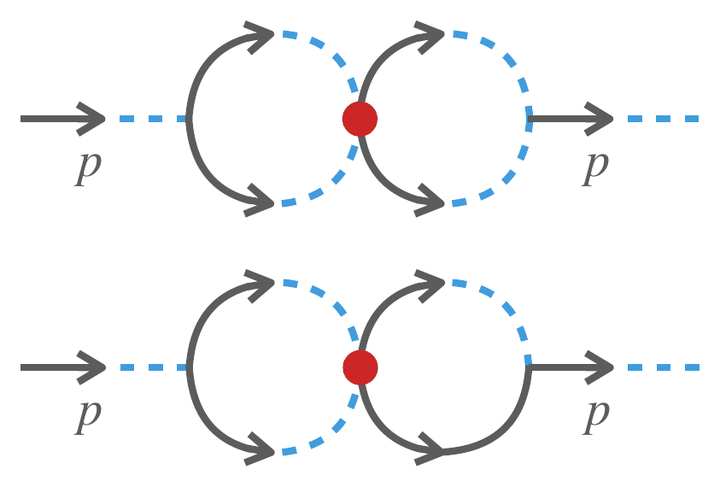
Hydrodynamics is often called universal: at long distances and late times, a fluid’s behaviour is supposedly fixed by a handful of numbers, such as its viscosity and conductivity. Random thermal fluctuations complicate this, and are usually modelled by the simplest noise that reproduces the classical equations. Using the effective field theory of fluctuating hydrodynamics, we show that this choice is not unique: new “stochastic transport coefficients”, invisible in the classical equations, still shape late-time correlations. Viscosity and its cousins do not tell the whole story.
-
Effective field theory for non-relativistic hydrodynamics
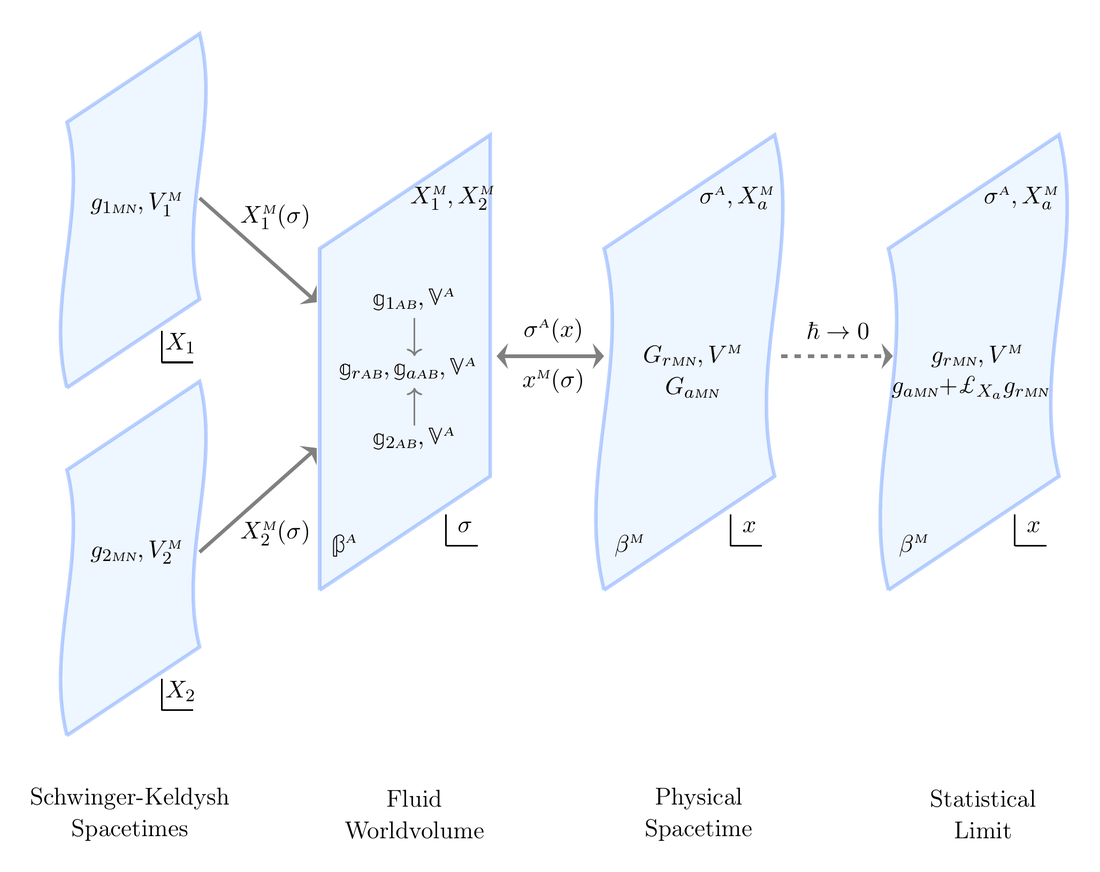
Everyday fluids such as water and air move far slower than light and obey non-relativistic physics. A modern effective field theory of hydrodynamics, which also accounts for random thermal fluctuations, existed for relativistic fluids, but not for these ordinary ones. I construct it using a geometric trick: a non-relativistic fluid can be viewed as a relativistic one in a spacetime with one extra dimension, along a special lightlike direction. The relativistic tools then carry over, and I use them to work out how fluctuations of energy, momentum and density interact.
-
Hydrodynamics for charge density waves and their holographic duals
In materials such as the cuprate superconductors, electrons can arrange into a crystal-like pattern called a charge density wave. Since the electrons interact strongly, such phases are often studied using hydrodynamics or holography, which models them with black holes. We formulate their hydrodynamics and point out an ingredient missed before, the lattice pressure, which captures the crystal’s strain and thermal expansion. Holographic models must include it, and we use them to compute, for the first time, how such a crystal expands with temperature and charge.
-
On the Hydrodynamic Description of Holographic Viscoelastic Models
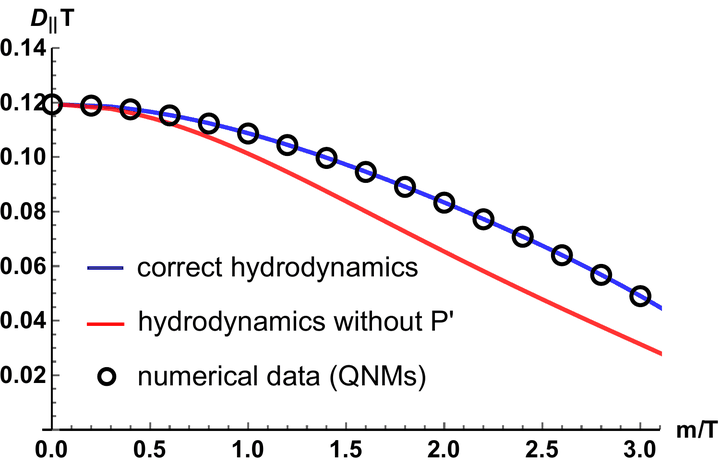
Holographic models, which describe strongly interacting matter using black holes, are popular tools for studying strange metals and solid-like materials. Yet their behaviour did not quite match the hydrodynamics expected to describe them. We show that the missing ingredient is the “strain pressure”, a recently proposed transport coefficient: once it is included, hydrodynamics reproduces all the slow vibrations of these black holes. Even when the strain pressure vanishes in equilibrium, its change with temperature still matters, completing the match between the two descriptions.
2019
-
Viscoelastic hydrodynamics and holography
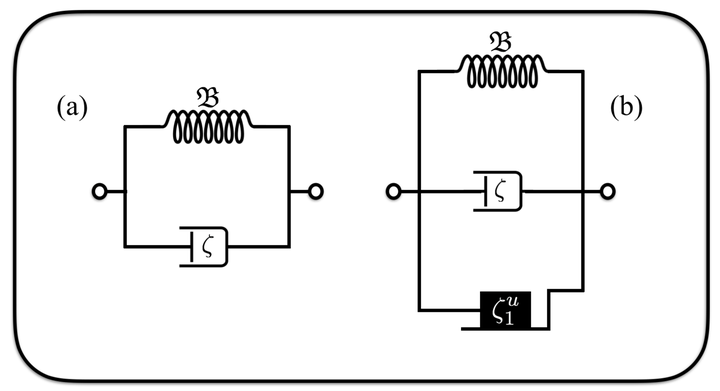
Most materials respond to being deformed partly like a solid, springing back, and partly like a liquid, flowing: they are viscoelastic. Despite a century of study, it has mostly been described by models built from springs and dashpots. We derive the nonlinear theory of viscoelastic crystals and liquid crystals from first principles, including all dissipative effects at leading order, and recover the classic Kelvin–Voigt model as a special case. We show that the same physics can be described as a superfluid of a higher-form symmetry, and build holographic models for both descriptions.
2018
-
One-form superfluids & magnetohydrodynamics
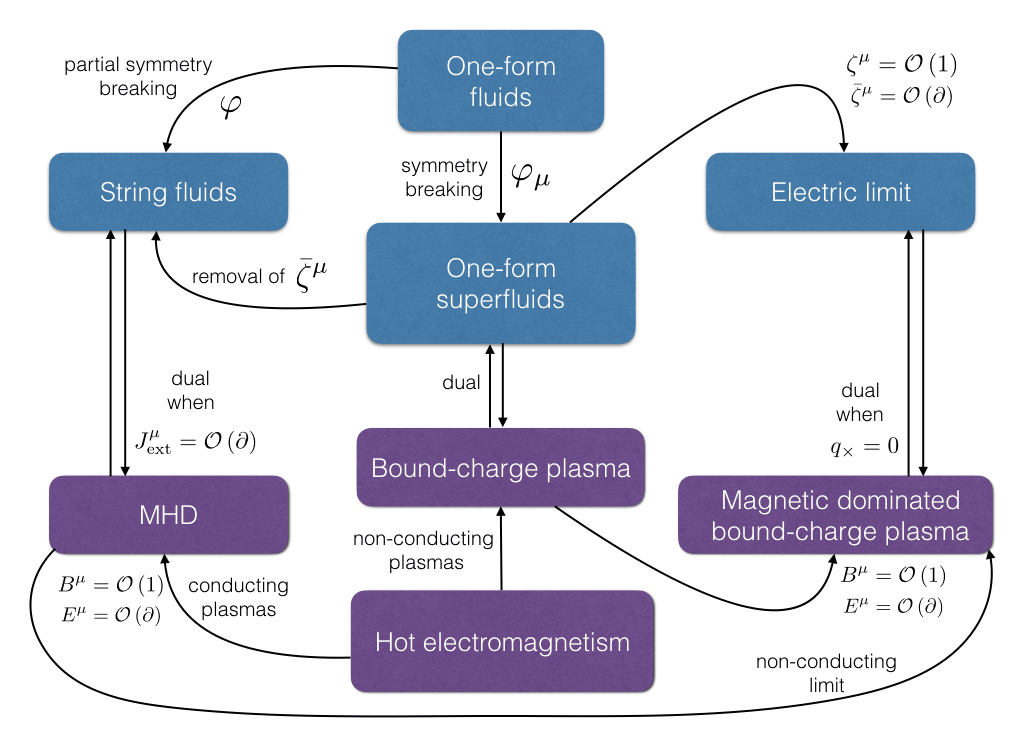
Magnetohydrodynamics, the theory of electrically conducting plasmas, describes everything from accretion disks around black holes to fusion reactors. We reformulate it using generalised symmetries, in which the fact that magnetic field lines never end becomes a symmetry, and show that magnetohydrodynamics is a “one-form superfluid” in which this symmetry is partly broken. Breaking it completely describes plasmas without free charges that can still be polarised, such as a neutral gas bathed in light, for which we build the first hydrodynamic theory. We also map out their equilibrium states.
-
Magnetohydrodynamics as superfluidity
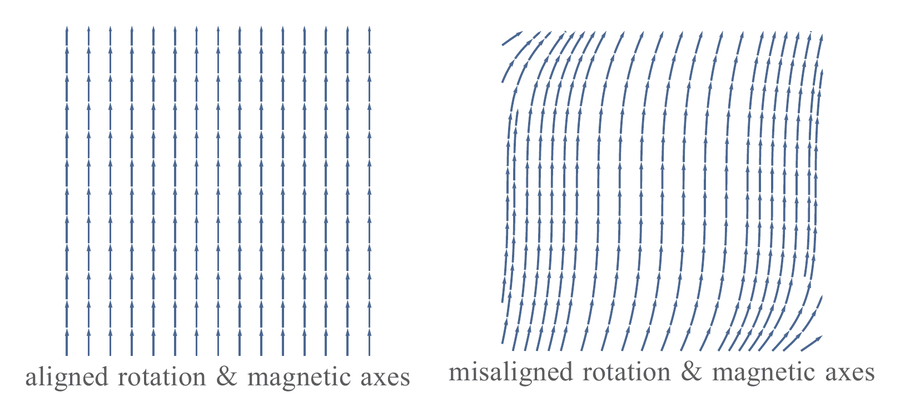
Magnetohydrodynamics describes how plasmas and magnetic fields move together, in stars and galaxies as well as in fusion experiments. We show that it can be recast as a new kind of superfluid. Magnetic field lines never end, since there are no magnetic monopoles, and this can be viewed as a “one-form” symmetry; in a plasma the symmetry is spontaneously broken, with a magnetic scalar potential as its Goldstone mode. This writes magnetohydrodynamics purely as conservation equations, better suited to simulations, and settles how its equilibrium states should be defined.
-
Holographic reconstruction of bubble spacetimes
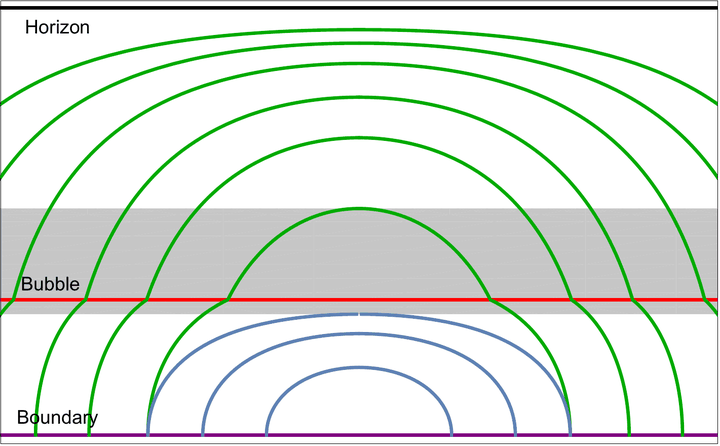
In holography, gravity in a spacetime is equivalent to a quantum theory living on its boundary, and a central question is how to reconstruct the spacetime from boundary data, such as the pattern of quantum entanglement. Proposed recipes had mostly been tested on very simple spacetimes. We test two of them, “hole-ography” and light-cone cuts, on spacetimes containing a thin bubble of matter. Light-cone cuts work within their limits, but hole-ography cannot fully capture the bubble, which casts a “shadow” that the shortest paths between boundary points only partly probe.
-
Dissipative hydrodynamics with higher-form symmetry
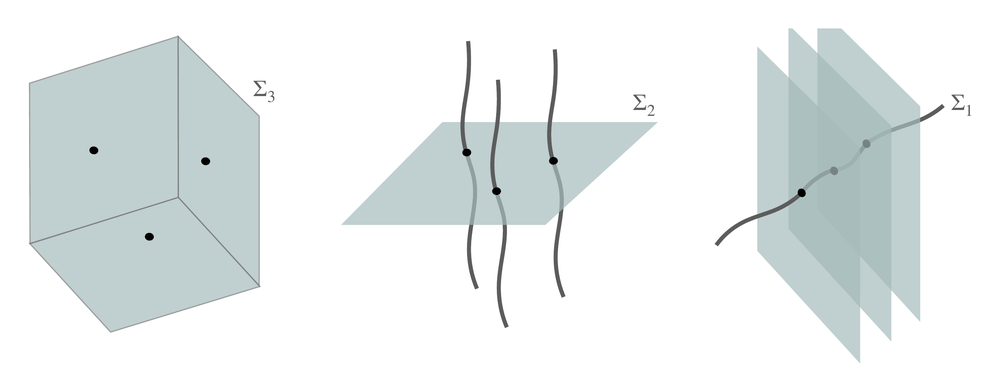
In ordinary fluids, conserved quantities are carried by particles. In some systems they are carried by extended objects such as strings or membranes; in a plasma, magnetic field lines behave like conserved strings. We build the theory of dissipative fluids filled with such objects, which flow differently along and across them, and identify all the transport coefficients, such as viscosities and resistivities, that characterise them at leading order. We also describe interfaces between phases of such fluids, where ripples on the surface show clear signs of the fluid’s directionality.
2017
-
Second order Galilean fluids and Stokes’ law
Everyday fluids are described by the Navier–Stokes equations, which capture viscosity but are only the first step in an expansion in how rapidly the flow varies. We work out the next step, the second-order corrections for an uncharged non-relativistic fluid, using “null fluids”: a description of such fluids as relativistic ones in one extra dimension, which makes their symmetries easy to handle. The method yields an algorithm for any order. We then ask how the new terms affect Stokes’ law for the drag on a small sphere moving slowly through a fluid, and find which leave it unchanged.
2016
-
On the surface of superfluids
When two phases of a fluid coexist, such as a liquid and its vapour, they are separated by a surface with physics of its own. Building on earlier work on ordinary fluids, we study the surfaces of superfluids, describing a superfluid bubble in equilibrium with an effective action. We find new surface effects, some of which break mirror symmetry, all fixed by the properties of the superfluid inside. Ripples on the surface reveal new modes: a sound-like surface wave and, when mirror symmetry is broken, a surface wave that travels in only one direction.
-
First Order Galilean Superfluid Dynamics
Superfluids, first seen in liquid helium in 1938, flow without friction and form vortices when rotated. We work out the general theory of how non-relativistic superfluids flow and dissipate at first order in gradients, including effects that break mirror symmetry or come from quantum anomalies. To do so, we construct “null superfluids”: relativistic superfluids in one extra dimension that are exactly equivalent to non-relativistic ones, so that the powerful tools of relativistic hydrodynamics can be applied.
-
Theory of non-Abelian superfluid dynamics
In a superfluid, a symmetry is spontaneously broken, giving rise to massless “Goldstone” modes that allow flow without friction. In helium-4 the broken symmetry is simple, but in helium-3 and other systems more intricate, non-Abelian symmetries can break. I develop the hydrodynamics of superfluids with any such broken symmetry, along with the constraints imposed by the second law of thermodynamics. Remarkably, the second law alone yields the Josephson equation, which governs how the Goldstone modes evolve. I also propose a new way to classify how such fluids transport energy and charge.
2015
-
Galilean Anomalies and Their Effect on Hydrodynamics
Quantum anomalies are symmetries of a classical theory that are broken by quantum effects. In relativistic fluids, such as the quark-gluon plasma, they make currents flow along magnetic fields and rotation axes. I study anomalies in non-relativistic theories by viewing them as relativistic theories in one extra dimension, now also allowing for spin and the torsion of spacetime. As in the relativistic case, they only occur in even dimensions, and they leave Galilean boosts untouched. I also work out how they modify the flow of non-relativistic fluids.
-
Null Fluids - A New Viewpoint of Galilean Fluids
Non-relativistic physics can be seen as a corner of relativistic physics: the symmetries of everyday, slow-moving systems sit inside those of special relativity in one extra dimension. We use this to define “null fluids”, relativistic fluids in one higher dimension that are exactly equivalent to ordinary non-relativistic fluids, with the same symmetries, thermodynamics and equations to all orders. This makes their symmetries manifest and lets relativistic results carry over. We also use it to include quantum anomalies, which add new effects that break mirror symmetry.
-
Equilibrium partition function for nonrelativistic fluids
For relativistic fluids, the equilibrium behaviour in any external field follows from a single object, the equilibrium partition function, which strongly constrains its flow. We construct the analogous partition function for non-relativistic fluids, obtaining them from relativistic fluids in one extra dimension through a light-cone reduction. The resulting “null fluid” matches the non-relativistic fluid exactly, with the same symmetries, thermodynamics, equations and partition function to all orders. This short paper introduced null fluids, developed fully in our follow-up work.
-
Higher Derivative Corrections to Charged Fluids in 2n Dimensions
Quantum anomalies, symmetries broken by quantum effects, leave distinctive mirror-asymmetric imprints on how charged fluids flow, as first discovered through holography. In four spacetime dimensions, the second law of thermodynamics fixes many of these effects in terms of the anomaly. We extend this analysis to fluids in any even number of dimensions, one step beyond the leading effect, using the fluid’s equilibrium partition function. Along the way we develop a systematic way to count all the possible terms at any order, and show that a simpler subset suffices to find the constraints.
2014
-
Entropy current for non-relativistic fluid
The second law of thermodynamics, that entropy never decreases, strongly constrains how fluids can dissipate energy. We apply it to non-relativistic charged fluids in electric and magnetic fields, including fluids whose microscopic physics breaks mirror symmetry, by obtaining them from relativistic fluids in one extra dimension. For ordinary fluids, it simply requires viscosity and the conductivities to be positive. For mirror-asymmetric fluids, the entropy current needs two extra terms, which the second law fixes exactly, and such effects survive only if the fluid is incompressible.
2013
-
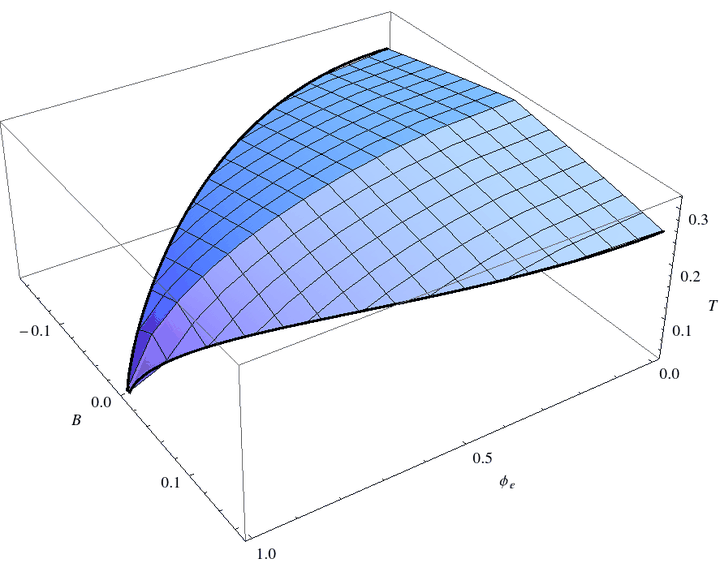
Dyonic Black Hole and Holography
Through holography, a black hole can describe a hot, strongly interacting quantum system living on the boundary of its spacetime. We study a dyonic black hole, which carries both electric and magnetic charge, to learn about the magnetic properties of such a two-dimensional system. The black hole’s phase diagram mirrors that of an everyday liquid and gas, with small and large black holes playing the roles of liquid and gas. The dual system behaves like a ferromagnet when no magnetic field is applied, and is paramagnetic or diamagnetic depending on the field and temperature.