Holography – the AdS/CFT correspondence – describes a strongly coupled quantum field theory by a weakly coupled gravitational theory in one higher dimension. I have used it to study dyonic black holes, the holographic reconstruction of bubble spacetimes, and holographic models of viscoelastic materials and charge density waves, where it provides a concrete test of hydrodynamic theories.
Holography
Gravity in one higher dimension as a window on strongly coupled matter.

Papers
-
Hydrodynamics for charge density waves and their holographic duals
@article{Armas:2020bmo, author = "Armas, Jay and Jain, Akash", title = "{Hydrodynamics for charge density waves and their holographic duals}", eprint = "2001.07357", archivePrefix = "arXiv", primaryClass = "hep-th", doi = "10.1103/PhysRevD.101.121901", journal = "Phys. Rev. D", volume = "101", number = "12", pages = "121901", year = "2020" }In materials such as the cuprate superconductors, electrons can arrange into a crystal-like pattern called a charge density wave. Since the electrons interact strongly, such phases are often studied using hydrodynamics or holography, which models them with black holes. We formulate their hydrodynamics and point out an ingredient missed before, the lattice pressure, which captures the crystal’s strain and thermal expansion. Holographic models must include it, and we use them to compute, for the first time, how such a crystal expands with temperature and charge.
-
On the Hydrodynamic Description of Holographic Viscoelastic Models
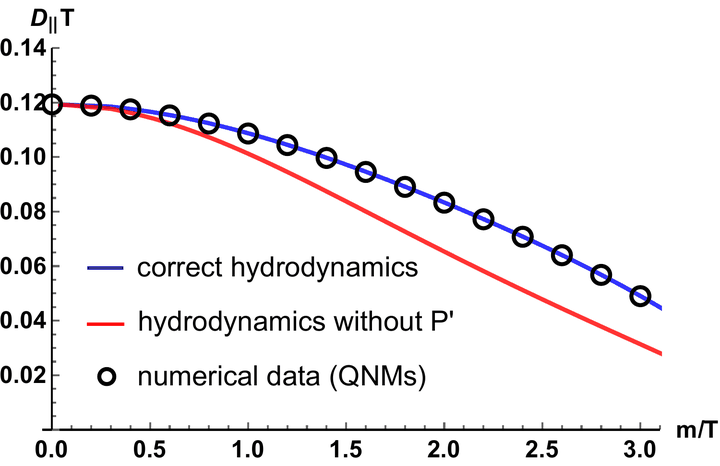
@article{Ammon:2020xyv, author = "Ammon, Martin and Baggioli, Matteo and Gray, Se{\'a}n and Grieninger, Sebastian and Jain, Akash", title = "{On the Hydrodynamic Description of Holographic Viscoelastic Models}", eprint = "2001.05737", archivePrefix = "arXiv", primaryClass = "hep-th", reportNumber = "IFT-UAM/CSIC-20-2", doi = "10.1016/j.physletb.2020.135691", journal = "Phys. Lett. B", volume = "808", number = "808", pages = "135691", year = "2020" }Holographic models, which describe strongly interacting matter using black holes, are popular tools for studying strange metals and solid-like materials. Yet their behaviour did not quite match the hydrodynamics expected to describe them. We show that the missing ingredient is the “strain pressure”, a recently proposed transport coefficient: once it is included, hydrodynamics reproduces all the slow vibrations of these black holes. Even when the strain pressure vanishes in equilibrium, its change with temperature still matters, completing the match between the two descriptions.
-
Viscoelastic hydrodynamics and holography
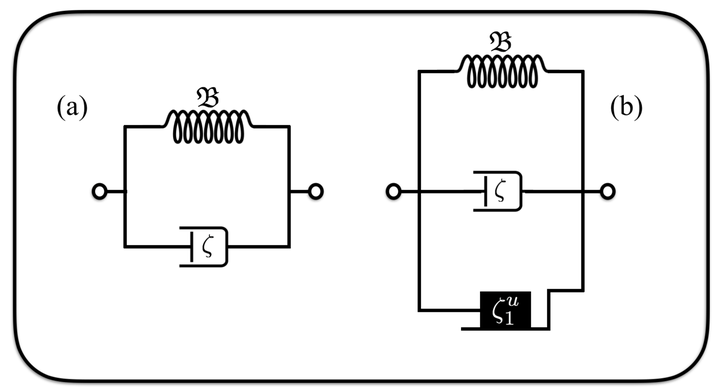
@article{Armas:2019sbe, author = "Armas, Jay and Jain, Akash", title = "{Viscoelastic hydrodynamics and holography}", eprint = "1908.01175", archivePrefix = "arXiv", primaryClass = "hep-th", doi = "10.1007/JHEP01(2020)126", journal = "JHEP", volume = "01", number = "01", pages = "126", year = "2020" }Most materials respond to being deformed partly like a solid, springing back, and partly like a liquid, flowing: they are viscoelastic. Despite a century of study, it has mostly been described by models built from springs and dashpots. We derive the nonlinear theory of viscoelastic crystals and liquid crystals from first principles, including all dissipative effects at leading order, and recover the classic Kelvin–Voigt model as a special case. We show that the same physics can be described as a superfluid of a higher-form symmetry, and build holographic models for both descriptions.
-
Holographic reconstruction of bubble spacetimes
@article{Burda:2018rpb, author = "Burda, Philipp and Gregory, Ruth and Jain, Akash", title = "{Holographic reconstruction of bubble spacetimes}", eprint = "1804.05202", archivePrefix = "arXiv", primaryClass = "hep-th", reportNumber = "DCPT-18/03, DCPT-18-03", doi = "10.1103/PhysRevD.99.026003", journal = "Phys. Rev. D", volume = "99", number = "2", pages = "026003", year = "2019" }In holography, gravity in a spacetime is equivalent to a quantum theory living on its boundary, and a central question is how to reconstruct the spacetime from boundary data, such as the pattern of quantum entanglement. Proposed recipes had mostly been tested on very simple spacetimes. We test two of them, “hole-ography” and light-cone cuts, on spacetimes containing a thin bubble of matter. Light-cone cuts work within their limits, but hole-ography cannot fully capture the bubble, which casts a “shadow” that the shortest paths between boundary points only partly probe.

-
Dyonic Black Hole and Holography
@article{Dutta:2013dca, author = "Dutta, Suvankar and Jain, Akash and Soni, Rahul", title = "{Dyonic Black Hole and Holography}", eprint = "1310.1748", archivePrefix = "arXiv", primaryClass = "hep-th", doi = "10.1007/JHEP12(2013)060", journal = "JHEP", volume = "12", number = "12", pages = "060", year = "2013" }Through holography, a black hole can describe a hot, strongly interacting quantum system living on the boundary of its spacetime. We study a dyonic black hole, which carries both electric and magnetic charge, to learn about the magnetic properties of such a two-dimensional system. The black hole’s phase diagram mirrors that of an everyday liquid and gas, with small and large black holes playing the roles of liquid and gas. The dual system behaves like a ferromagnet when no magnetic field is applied, and is paramagnetic or diamagnetic depending on the field and temperature.

Talks
Holographic reconstruction of gravitational instantons
-
Perimeter Institute for Theoretical Physics, Canada