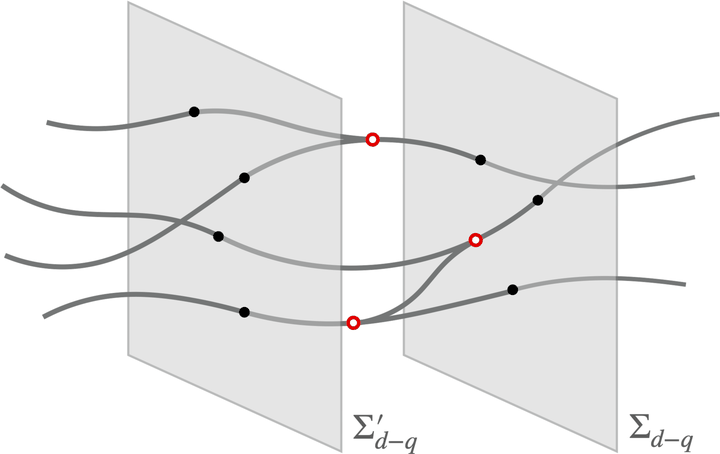
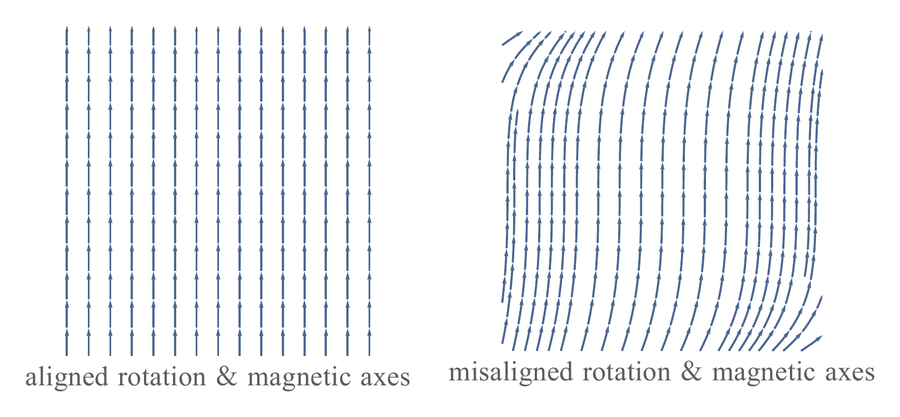
Magnetohydrodynamics, or MHD, describes conducting fluids in strong magnetic fields: it couples hydrodynamics to Maxwell’s electromagnetism. Because there are no magnetic monopoles, magnetic field lines never end. This leads to a conservation principle: unless external sources act, magnetic field lines can be neither created nor destroyed.
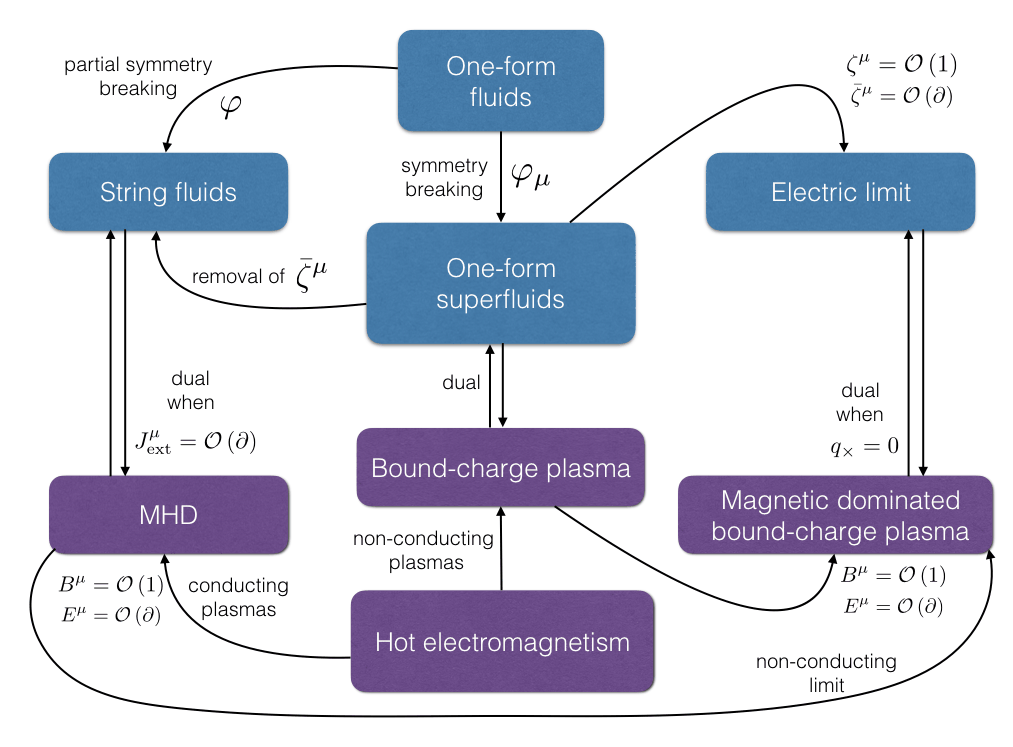
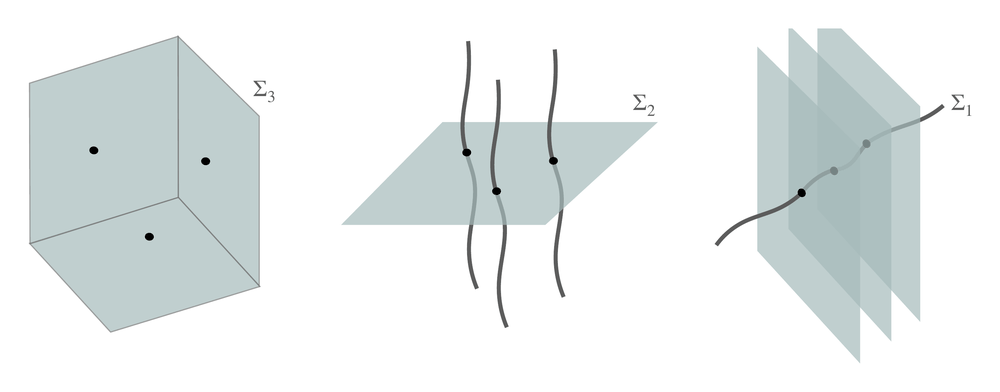
This is an example of a higher-form or generalised symmetry. Ordinary symmetries act on point-like particles such as electrons; higher-form symmetries act on extended objects such as strings or surfaces. With collaborators, I have studied hydrodynamics with higher-form symmetries in general (arXiv:1803.00991) and shown that MHD itself is such a theory, with a spontaneously broken one-form symmetry (arXiv:1808.01939).
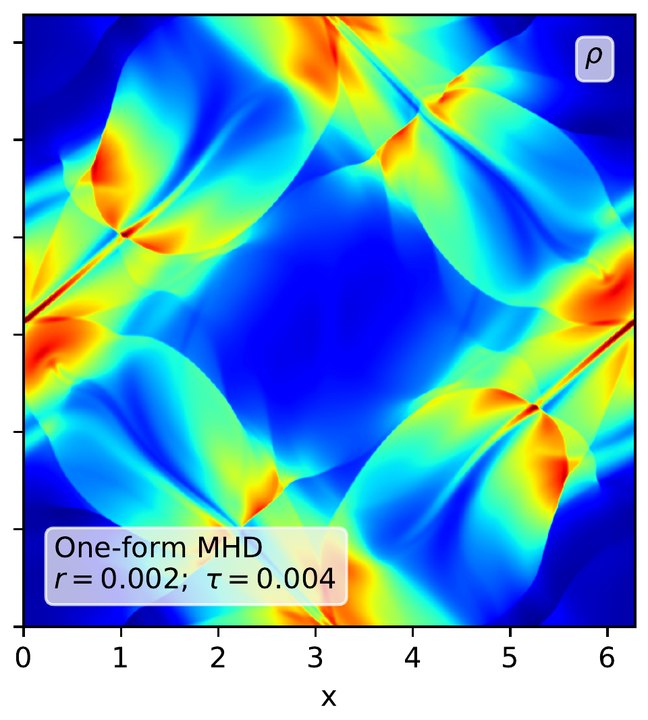
This formulation also makes resistive plasmas easier to simulate, without Ampère’s law. More recently, we have studied effective theories with higher-group symmetries, which combine symmetries of different form degrees, with an application to the bosonic M5 brane. We have also studied approximate higher-form symmetries, which describe topological defects and dynamical phase transitions.